


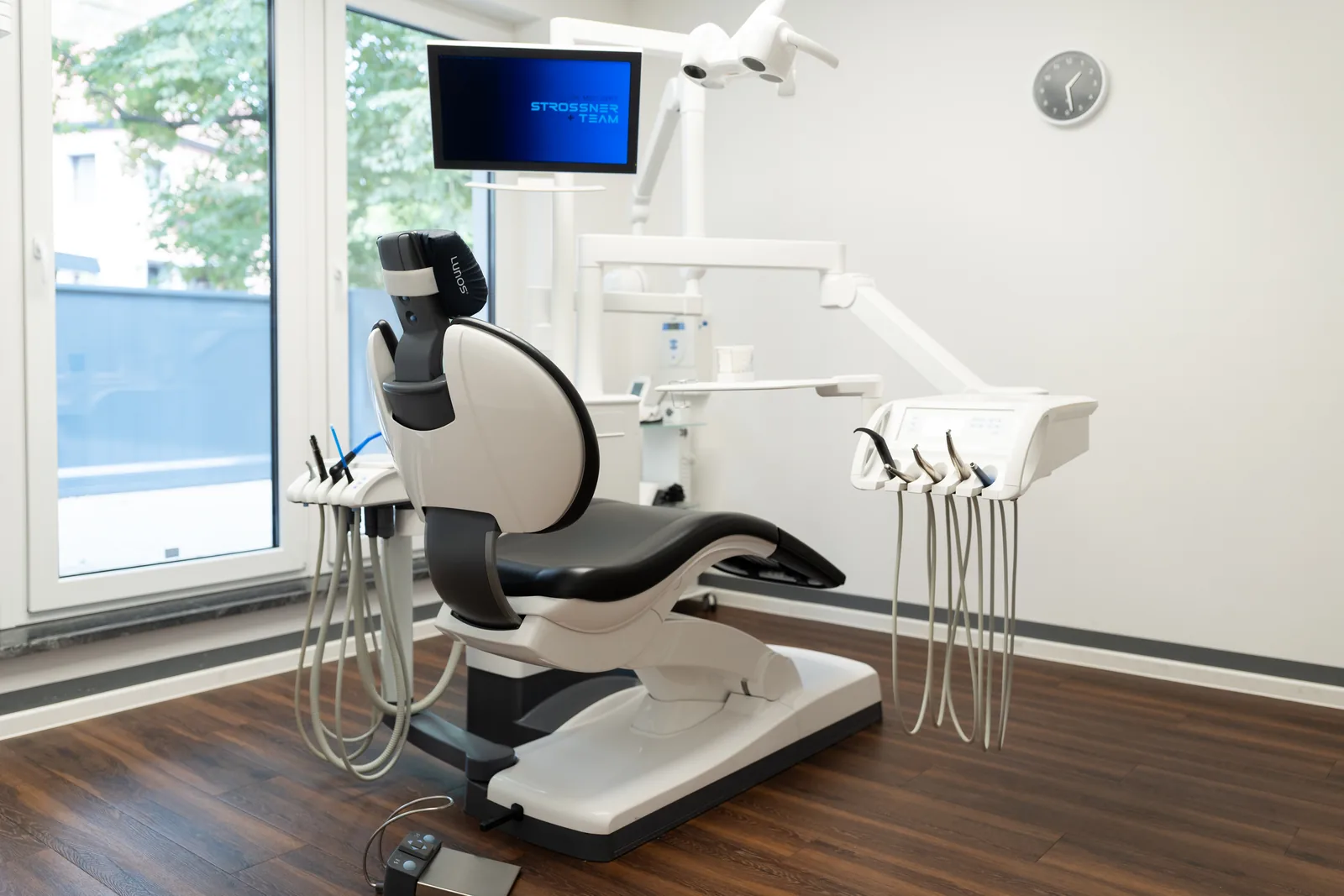
Our Medical Technology
From X-ray to finished tooth, with no detours
For us, digital does not mean “modern for technology's sake” – it means fewer impressions, fewer appointments and fewer surprises.
Who treats you
Dr. med. dent. M.Sc. Sandro Strößner – working in implantology since 2013 · M.Sc. in Oral Implantology and Periodontology – together with the team at Zahnkompetenzzentrum Weißenfels.
First Appointment
Consultation, medical history and examination (3D X-ray if needed) – we plan first and treat later. A pure information meeting without examination is non-binding; the examination and the cost plan are charged according to the GOZ fee schedule.
Costs
A written treatment and cost plan before treatment begins; an initial, non-binding price range is provided by the cost calculator further down.
First Step
Appointments online around the clock (“Appointment” button) or by phone during opening hours on 03443 339 65 54.
“We also accept patients without a referral and plan your entire course of treatment in one pair of hands.”
The Principle
Cone-beam CT scan, intraoral scans, structured assessment. The first appointment isn't treatment — it's a conversation backed by data.
From the final dental prosthesis back to the surgery. What should exist at the end determines the first step — not the other way round.
One team under one roof: surgery, prosthetics, laboratory.
Our Medical Technology
For us, digital does not mean “modern for technology's sake” – it means fewer impressions, fewer appointments and fewer surprises.
01
03
05
Our range: single-tooth implants, multi-unit bridge-supported restorations, All-on-4 and All-on-6, ceramic implants, bone augmentation and sinus lift. For anxious patients, also available under sedation or general anaesthesia.
Short videos in which our team answers the questions we're asked most often. No jargon, no sales pressure.
The videos provide general information and do not replace individual advice or examination. The course and outcome of treatment depend on personal circumstances; medicine offers no guarantee of success. All videos have subtitles.
EVERYTHING FROM A SINGLE SOURCE
Implant treatment is not a single appointment but a journey through several phases: first comes examination and planning, then the implant is placed in the jawbone as an artificial tooth root, later the visible dental prosthetics are made and fitted, and the result is checked regularly over the years that follow. These phases are interlinked – the surgical planning determines how well the later prosthetics will fit, and the desired shape of the prosthetics already determines where the implant should be positioned in the first place. This is exactly where the idea of “everything under one roof” comes in: diagnostics, surgery, and prosthetics come together with the same treatment team at a single location, rather than being spread across different practices.
At the Zahnkompetenzzentrum Dr. med. dent. M.Sc. Sandro Strößner in Weißenfels, we support patients from the first consultation through to long-term aftercare, all in one place. In practice, this means: the same people who examined your initial situation and planned your treatment also place the implant, take care of the dental prosthetics, and support you during aftercare. There is no break between the practice that operates and the practice that later makes the crown. Whoever takes charge of your treatment knows your history first-hand, because it was not passed on through reports and referral letters but built up within the same practice.
The word “direct” stands for two things here. First, direct access to the person clinically responsible – you speak with the practitioner who actually carries out your treatment, not via several intermediate stages. Second, a direct, continuous treatment pathway without unnecessary detours. This page explains what “everything under one roof” concretely means in implantology, how a continuous process differs from treatment spread across several practices, and for whom this approach can be particularly worthwhile.
To make clear what is being brought together, it's worth looking at the three main building blocks. They are closely interlinked professionally.
In principle, each of these building blocks could take place at a separate practice. That is certainly possible – but every handover between different providers is a point where information has to be passed on, appointments have to be coordinated, and responsibility changes hands. The “everything from a single source” approach tries to avoid these handover points as far as possible, by bringing all the building blocks together within the same team and at the same location.
FRAGMENTED VS. CONTINUOUS
Implant treatment can be spread across different practices: one practice makes the diagnosis, a specialised surgical practice places the implant, and the original practice then makes the dental prosthetics. Such a route is professionally viable and common in many regions. However, it involves organisational and communication effort. We describe this fragmented care here expressly in general terms and not as an assessment of individual practices – it is about the principle of division, not the quality of those involved.
When several practitioners are involved in a case, typical friction points arise at every hand-off. These don't necessarily have to lead to problems, but they require extra effort to coordinate, and carry the risk that information gets lost along the way or is interpreted differently.
When diagnostics, surgery, and prosthetics are all in the same hands, most of these interfaces fall away. The planning of the implant takes into account, right from the start, what the later dental prosthetics should look like and how they will be loaded – so-called “backward planning”, in which planning works backwards from the desired outcome. Because the same team has an overview of both sides, the implant can be positioned not only favourably for surgery, but also sensibly for prosthetics. This coordination between surgery and dental prosthetics is one of the most important preconditions for a result that functions well and feels natural afterwards.
There is also continuous accountability: when one and the same team supports treatment through every phase, there is a clear point of contact for the entire journey. Observations from surgery feed directly into prosthetic treatment, and insights from aftercare are known to the same people who started the treatment. This creates continuity.
Honest context matters to us: “everything from a single source” is an organisational and care-related advantage, not a promise of success. Even fully integrated treatment follows the same medical requirements as any other implant treatment, and healing, osseointegration and durability depend on many individual factors. What single-source care can deliver is a coordinated, well-organised path – not a different biological outcome.
THE DIRECT PROCESS
The following overview shows how implant treatment proceeds when all phases come together at one location. What stands out above all is what does not happen: no referral to another practice for the surgical part, no trip to a third place for the dental prosthetics. Each step builds on the previous one and stays within the same team. The order and duration always depend on your personal situation and may vary in individual cases.
The practical difference with this approach lies less in the pure treatment duration than in coordination. Because no findings need to be sent between practices and no appointments need to be coordinated across different providers, the path can generally be planned more straightforwardly. If questions arise, there is a fixed point of contact who knows the whole history, rather than being referred elsewhere. This makes the process easier to follow.
You remain closely involved throughout the entire treatment. Before every major step, we explain what happens next, what to look out for at home, and when the next appointment makes sense. This way, you always know which phase of your treatment you are in – and who you can turn to.
OUR OWN PRACTICE LABORATORY
An important element of single-source treatment is the close link between the dental prosthetics and the practice. The visible part of an implant – the crown, the bridge, or the denture – is made in a dental laboratory. Whether this laboratory is part of the practice or located far away has a noticeable effect on coordination. At the Zahnkompetenzzentrum Dr. med. dent. M.Sc. Sandro Strößner, treatment and dental technology work closely together, so that the distance between the treatment team and the laboratory is short, and everyone involved can speak to one another directly.
A dental restoration is bespoke work. Shape, colour, translucency and the way it meets the gumline all need to match the existing row of teeth for the result to look natural. The more directly the dental laboratory can coordinate with the clinician and, where useful, with you, the more easily these finer details can be achieved. When treatment and laboratory work closely together, several aspects benefit.
Modern implantology increasingly relies on digital methods – from three-dimensional diagnostics, through digital planning of implant position, to computer-aided manufacture of the dental prosthetics. When planning and manufacture come together under one roof, this digital data can be used more seamlessly, without information having to be reprocessed at the interface between different businesses. This supports precise, well-documented care, in which the planned and the actually achieved position of the dental prosthetics are closely aligned.
Here, too, an honest assessment applies: an in-house or closely linked laboratory is an organisational advantage for coordination. It does not replace careful dental-technical work itself, and it does not guarantee any particular outcome – but it eases the direct lines of communication that are helpful for a finely tuned restoration. Which form of dental prosthetics and which material make sense in your case is something we discuss individually, taking your wishes into account.
PERSONAL POINT OF CONTACT
Many people considering implant treatment describe a recurring need: they want to know who to turn to, and they do not want to have to explain their history from scratch to every new practitioner. Treatment from a single provider meets this need, because the same team supports you through every phase of treatment. Having a direct line to the person clinically responsible is more than just a convenience – it helps ensure that decisions are based on a complete understanding of your situation.
The advantage of a fixed point of contact shows itself at many small points along the treatment pathway. It makes treatment more personal.
It makes a difference whether you sit down before a procedure opposite a previously unknown clinician or a team you already know from consultation and planning. On request, a procedure can also be accompanied by sedation to ease tension – and this, too, is discussed and prepared with the same familiar people.
Implant treatment often extends over weeks to months, and aftercare continues to accompany you for years beyond that. During this time, a relationship builds between you and the treatment team. When this common thread is not broken by switching between practices, a resilient, trusting relationship can develop. We do not see this as a minor added benefit, but as a core part of what makes single-source treatment what it is: that you, as a person with your individual situation, stay consistently at the centre of attention.
ADVANTAGES & SUITABILITY
Single-source care is not a medical procedure in its own right, but a way of organising treatment. Its benefit lies mainly in coordination, alignment and support. The following points summarise why this approach can be attractive – always provided that the individual medical requirements for an implant are met.
In principle, this approach is an option for anyone who is considering an implant and values a coordinated, continuous process.
We are equally open about the fact that organisational structure alone does not replace a treatment decision. Whether an implant is even the right procedure in your case depends on the available bone, oral health, general state of health and your personal expectations. We assess this carefully, show you possible alternatives such as bridges or removable dentures, and decide together – without promising anything that cannot responsibly be guaranteed in advance.
COSTS & TRANSPARENCY
The cost of implant treatment depends on many factors: the number of implants, the material used, the type of dental prosthetics, and whether bone augmentation or other preliminary treatment is required. One advantage of treatment from a single source, however, is that all these items – diagnostics, surgery, dental prosthetics and, where applicable, bone augmentation – can be shown in a single, coherent treatment and cost plan. This gives you a complete overview from the outset, and you do not have to piece the costs together yourself from several separate plans from different practices.
Transparency is a central concern for us. Before treatment begins, you receive a written, comprehensible treatment and cost plan listing the individual services. We explain the plan item by item, so that you have a clear basis for your decision. On request, we discuss which treatment makes medical sense while also fitting your means, and address possible payment arrangements, so the treatment remains easy to plan for.
Statutory health insurers pay a fixed subsidy for dental prosthetics based on the diagnosis, calculated against standard care. As the implant itself usually goes beyond standard care, an out-of-pocket share generally remains. Keeping a dental bonus booklet (Bonusheft) regularly and without gaps can increase the subsidy. Privately insured patients and those with supplementary insurance should clarify the level of reimbursement with their insurer in advance, as conditions vary by tariff. Because diagnostics, surgery and prosthetics all come together under one roof with us, you receive a single, coherent treatment and cost plan that you can submit to your health insurer before treatment begins – please feel free to contact us on 03443 339 65 54.
When care is spread across several practices, separate invoices and plans may be issued for the surgical and the prosthetic part. This is not wrong, but it makes it harder to keep track of the total costs. If the treatment comes together in one place, the financial framework can be presented in a consolidated way from the outset. This creates clarity and helps you make an informed decision.
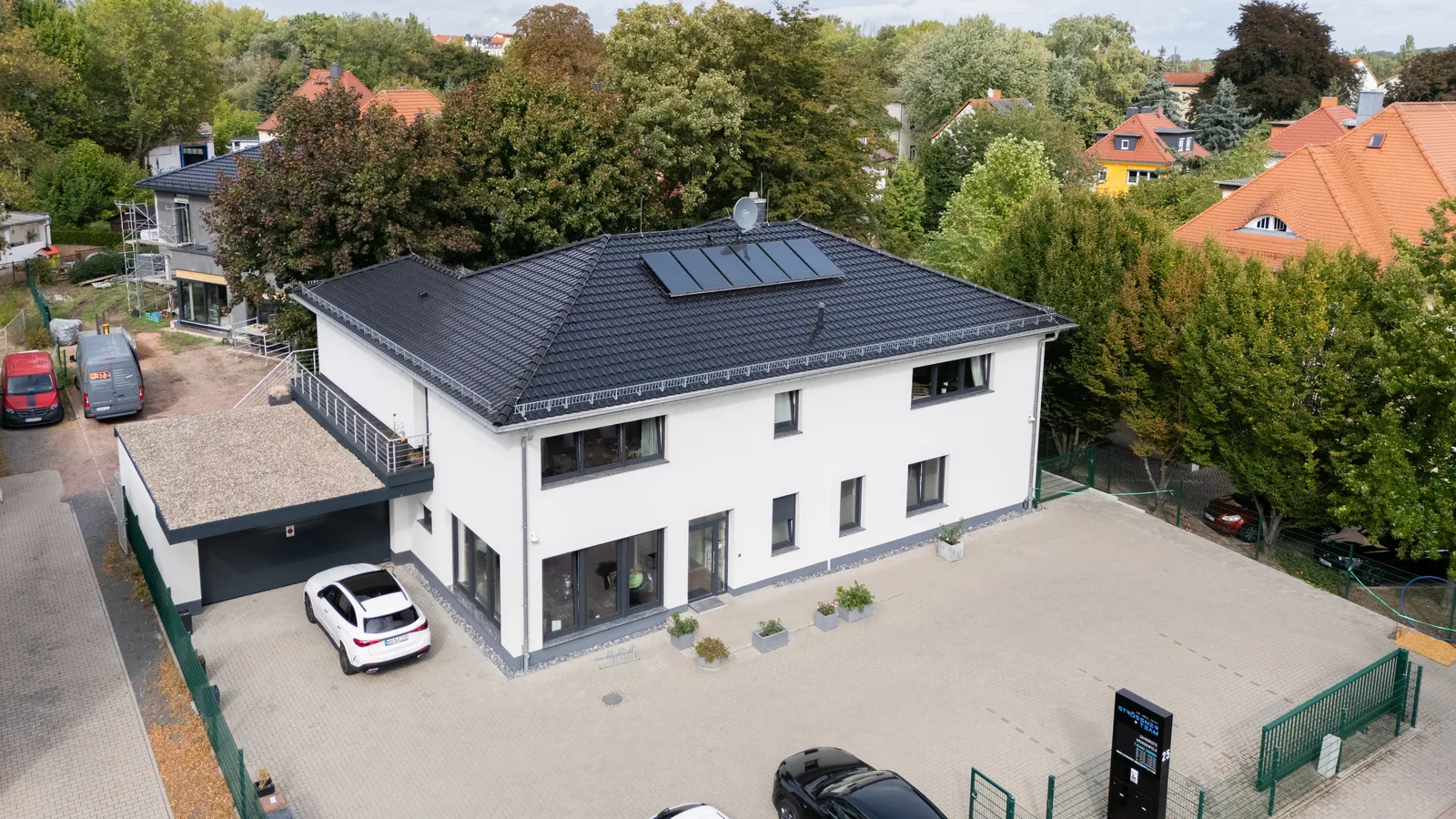
The Zahnkompetenzzentrum Dr. med. dent. M.Sc. Sandro Strößner in Weißenfels is here for patients. The practice is easy to reach from towns such as Hohenmölsen, Lützen, Teuchern, Naumburg, Zeitz, Bad Dürrenberg, and the surrounding communities. Diagnostics, planning, the surgical procedure, prosthetic treatment, and aftercare all take place at a single location, so you do not have to switch between several practices for your implant treatment.
If you are considering an implant and value a continuous, coordinated approach, a personal consultation is the best first step. We look at your situation, answer your questions, and show you the possible options – factually, clearly, and without time pressure. Please feel free to book an appointment by phone on 03443 339 65 54. We take the time your concerns deserve and support you, from the first consultation through to aftercare, all from a single source.

We also accept patients without a referral and plan your entire treatment pathway from a single source.
This saves you journeys and time. At the first appointment – where appropriate – we take a CBCT and a scan, discuss treatment options, and set out the costs transparently. You decide whether and when you would like to begin.
What convinced me was the absence of marketing. No promises. Just planning, explanation, execution. I had eight implants placed and didn't even feel like I'd made a difficult decision.
At the Zahnkompetenzzentrum
about 40 minutes by car (A9)
in Weißenfels
Fixed Dental Restoration on Your Own Root
All Services at a Glance
No-Obligation Cost Calculator
Process, Technique, Immediate Treatment
Upload your cost plan, call-back within two working days
Computer-navigated implant placement in real time. See how an implant procedure takes place at our Zahnkompetenzzentrum.
This video contains no spoken content. The audio track consists solely of subtle background music — no spoken or meaning-bearing audio information is lost.
Answer a few short questions and you’ll immediately receive a transparent price range for your situation — complete with a clear breakdown and possible monthly instalment.
As a rule X-Guide 3D-navigated & minimally invasive. We plan your implant on the computer and, as a rule, place it with navigation to within a millimetre — through a particularly small, tissue-sparing access point. This extra effort is already built into every price.
You now know your approximate investment. In the information consultation we clarify which restoration makes sense for your case – and whether there might be a simpler way.
A no-obligation information meeting, without treatment. Examination, any necessary X-ray diagnostics and the written treatment and cost plan are carried out according to medical indication and charged under the GOZ; we tell you the costs in advance. You decide at your leisure.
A non-binding estimate for initial guidance only — not a treatment and cost plan, and no substitute for a personal consultation. The actual cost depends on your individual findings and is set out in a written treatment and cost plan showing the expected costs.
Get practical dental health tips and news from our practice — free, and you can unsubscribe at any time.
